
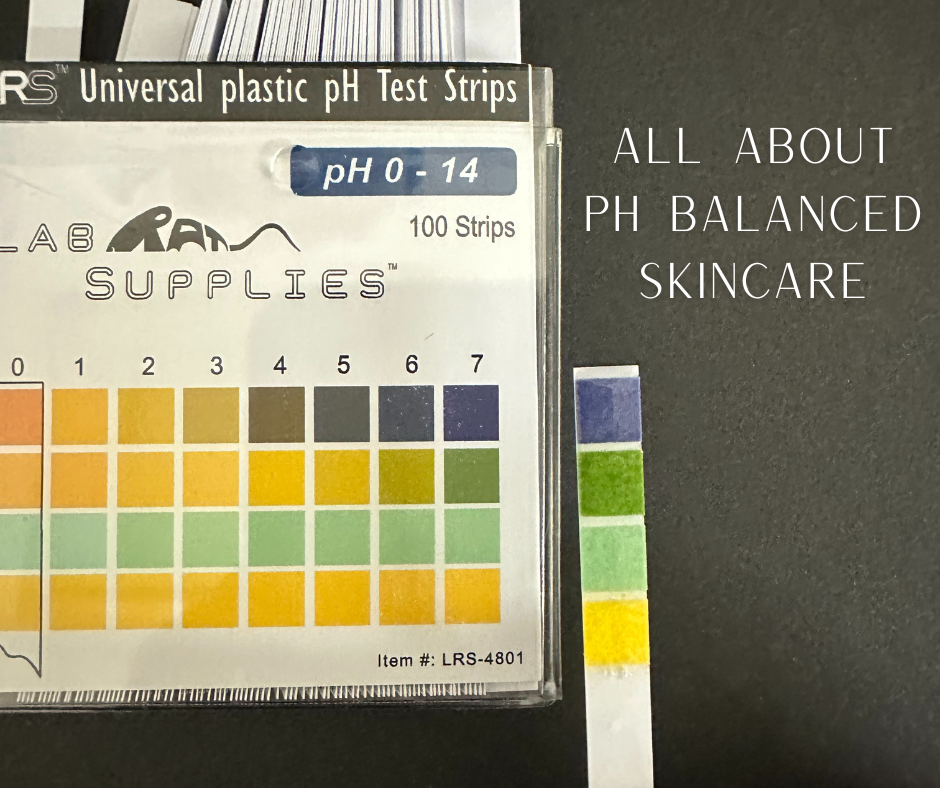
All About pH Balanced Skincare
This post isn’t meant to replace medical advice. If you’re dealing with pain, persistent irritation, or ongoing inflammation, it’s best to check in with your doctor or dermatologist.
Have you ever stopped to think about how extraordinary your skin is? It really is one of nature's greatest masterpieces. It's the body's largest organ and does so much more than cover and protect you; it's also a built-in messenger. When something's off, your skin lets you know. Redness, dryness, or irritation are all ways it communicates that something isn't quite right, whether that's sensitivity, an underlying condition, or a pH imbalance.
You may already choose natural, plant-based products that feel good and are sustainable for the planet. But here's something to keep in mind: just because a product is labeled "natural" doesn't necessarily mean it's good for your skin, especially if its pH is off. If you haven't thought about pH since high school chemistry, don't worry, you're not alone. However, it plays a bigger role in your skin's health than you might realize.
In this post, we'll take a closer look at what pH levels really mean for skincare, the ideal pH range for healthy skin, what can throw it off, and how to naturally restore its balance.
What is pH?
In literal terms, pH stands for the "power of hydrogen"; it measures how acidic or alkaline something is on a scale from 0 to 14. A pH of 7 is considered neutral (neither acidic nor alkaline). Anything below 7 is considered acidic, and anything above 7 is considered alkaline.
To put it in perspective: lemon juice has a pH of about 2, vinegar is around 3, distilled water sits at 7, baking soda is close to 8, and most bar soaps range from 8 to 11.
What Does "pH-balanced" Mean in Skincare?
When a skincare product is labeled "pH-balanced," it means the formula has been adjusted to closely match your skin's natural pH, helping to support the acid mantle rather than disrupt it.
When this delicate balance shifts, your skin lets you know. It's a bit like Goldilocks. If you use skincare products that are too acidic or too alkaline, your skin won't feel quite right.
Healthy skin has a natural pH between about 4.5 and 5.5, which means it's just a little on the acidic side. When you use products that stay close to that range, you're helping your skin do what it does best: protect and balance itself. That slight acidity keeps your skin's ecosystem happy and good bacteria thrive, while harmful microbes and irritants are kept in check.
Alkaline products (pH above 7), like bar soaps and strong detergents, can be especially tough on your skin at higher concentrations because they break down the acid mantle, the thin, natural barrier that keeps moisture in and irritants out. Think of the acid mantle as your skin's invisible shield, made up of natural oils, amino acids, and sweat, all working together to protect and balance your skin.
This is one of the reasons many skincare experts recommend skipping traditional bar soaps in favor of gentler alternatives. "When you use a product with a pH that's too different from your skin's natural level, it can disrupt your skin's acid mantle," explains the skincare experts on CosmeDocs. "Each time that happens, your skin needs time to recover its normal balance—and repeating that cycle too often can affect how your skin functions."
The result? Dryness, tightness, and irritation. Instead, opt for soap-free or non-foaming cleansers. These are formulated to cleanse effectively without upsetting your skin's natural balance, helping it stay hydrated, healthy, and resilient.
We test our products for their pH levels to ensure they’re the best fit for most people's skin types. Depending on the purpose of the product, the pH level may vary to be most effective for your skin. For example, our Hand & Body Wash comes in at an even pH of 7. This makes it a good choice as a hand and body wash because the slightly alkaline pH level will effectively clean skin without being too harsh for those with sensitivities. Most soaps are between a pH of 8-9, so ours at a 7 is on the more mild side. When it comes to moisturizing products, our Hand & Heel Creme has a pH of 6. This falls in line with where most moisturizers and serums are on the market. It’s acidic enough to keep harmful bacteria away while still protecting and hydrating the skin barrier.
Ultimately, users should decide on their own if a product is a good fit for their skin type as everyone's skin is slightly different.
Signs Your Skin's pH is Off
When your skin's pH is out of balance, you'll often feel it and see it too, and it may start sending subtle (or not-so-subtle) signals. Remember, your skin is constantly communicating with you.
When your skin becomes too alkaline (pH rises above its ideal range of 4.5-5.5), it can lose its natural balance. You might notice:
Dryness and tightness – that "squeaky clean" feeling means your skin's protective oils are gone.
Redness or irritation – your skin may feel more sensitive or react to products that never bothered you before.
Breakouts or rough texture – when your barrier is weak, bacteria and dryness can both take a toll.
When your skin becomes too acidic (pH rises below its ideal range), it can start to feel out of sync. You might notice:
Extra oil and breakouts – your skin may look shiny or congested as it tries to rebalance itself.
Redness or stinging – products that used to feel fine suddenly tingle, burn, or cause irritation.
Dry and oily patches – parts of your skin feel tight while others look greasy or inflamed.
The good news? Your skin is remarkably resilient. Instead of viewing these changes as setbacks, think of them as feedback, your skin's way of asking for a little extra care and balance.
With the proper care, you can help restore its balance and bring back that soft, healthy glow you love.
What Throws Your Skin's pH Out of Balance
At Sage Stone Botanicals, we believe nature and chemistry should work together, not against each other, because true skincare harmony blends both. Nowhere is this more true than in skincare, especially for those who prefer gentle, natural care and have sensitive skin.
Even when you're using clean ingredients, several everyday habits and environmental factors can shift your skin's delicate pH. Here are some of the most common culprits:
Harsh or alkaline cleansers – Traditional bar soaps and foaming washes often have a high pH (9–10). While they remove dirt effectively, they can also strip your skin of natural oils, leaving it dry, irritated, and unprotected.
Over-exfoliation – Using too many acids, scrubs, or exfoliating products can make your skin overly acidic, weakening the barrier and triggering redness or sensitivity.
Hot water & overwashing – Cleansing with hot water or washing too often can strip your skin of its natural oils and upset its protective balance.
Environmental stressors – Sun exposure, pollution, and even alkaline tap water can temporarily raise your skin's pH.
Age & sensitivity – As we age, skin tends to become more alkaline. Mature or reactive skin may also struggle to maintain its natural acidity.
Irritating ingredients – Even natural ingredients, such as certain clays or essential oils, can be too alkaline or harsh if not correctly balanced.
Lifestyle factors – Keeping makeup on overnight, skipping protective products, dehydration, or poor diet can all contribute to imbalance.
How to Restore & Maintain Balance Naturally
Your skin knows how to find balance; you need to give it the right support. Here's how to help it thrive naturally:
1. Start with a gentle, pH-balanced cleanser
Choose cleansers labeled "pH balanced" (ideally in the 4.5–6 range). Avoid bar soaps and harsh surfactants; instead, look for mild options such as coco-glucoside or decyl glucoside. They cleanse effectively without stripping away your skin's natural oils.
2. Tone mindfully
After cleansing, restore acidity with a botanical toner made from rosewater, aloe vera, or alcohol-free witch hazel. These soothing ingredients rebalance and refresh without irritation.
3. Moisturize with barrier-supporting botanicals
Hydrate with nourishing ingredients like jojoba, aloe vera, rosehip seed oil, and shea butter, all favorites of Sage Stone Botanicals. These botanicals help replenish lipids, calm inflammation, and keep your skin soft and resilient.
4. Use actives
Incorporate actives (i.e., acids, retinoids, vitamin C, or exfoliating enzymes) in moderation. Limit exfoliation to 1–2 times a week. Balance AHAs (Alpha Hydroxy Acids) and BHAs (Beta Hydroxy Acids) with oils made with natural ingredients like Oilixer by Sage Stone Botanicals to prevent over-acidifying your skin.
5. Protect your acid mantle daily
Wash with lukewarm water, avoid over-cleansing, apply mineral sunscreen, and stay hydrated inside and out.
6. Listen to your skin
Tightness, redness, or breakouts are feedback, not failure. Patch-test new products and adjust as your skin's needs change.
When your skin's pH is in harmony, every botanical you apply can do its best work. Explore Sage Stone Botanicals' thoughtfully crafted skincare products to respect your skin's natural rhythm. Because when your skin feels balanced, everything else does too.
Your skin’s pH balance is the foundation for a healthy, glowing complexion. In order to keep that foundation strong and functioning properly, knowledge is the key. Understanding when your skin is unbalanced and how to repair it will serve you and your skin well.
Now that you’ve received an education in all things pH pertaining to skin, it’s time to shop for skincare products that won’t let you down!
At Sage Stone Botanicals, we craft our products with your skin’s natural pH balance in mind. These formulas are free from harsh chemicals, sulfates, and fillers, offering gentle, effective care rooted in nature. Shop for your skincare products today and experience the difference they can make.